


Economic Forum – Sustainable Innovation and ESG Strategy in Exporting Companies
NITextile participated in the Economic Forum – Sustainable Innovation and ESG Strategy in Exporting Companies, which took place last Tuesday, May 21st, in the Grand Auditorium of Forum Braga.
The Forum was attended by the President of Braga City Council, Ricardo Rio, who opened the forum highlighting the growth of investment by companies in the Municipality for the creation of innovative hubs with high added value, a strategy that began 10 years ago and which resulted in Braga being projected as one of the main exporting and innovative municipalities, having gone from representing just 1.64% in the weight of national exports in 2013, to 3.65% in 2023.
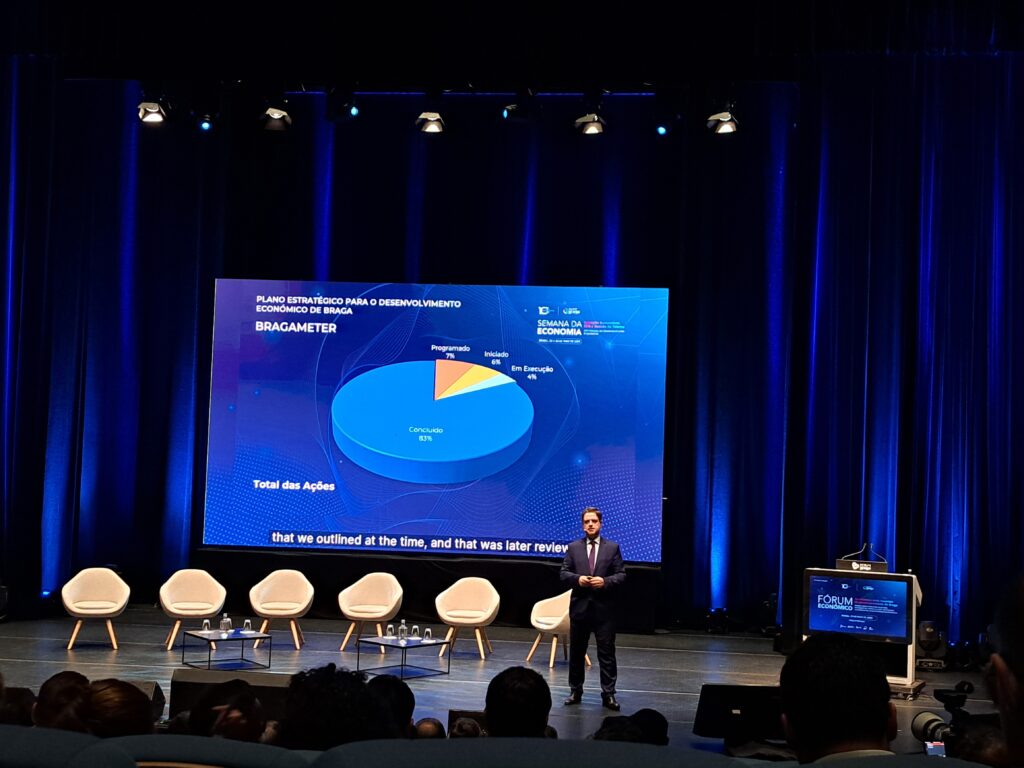
Through the economic dynamization units that the Municipality has, namely Invest Braga and Startup Braga, as well as the action units, Fórum Braga and Centro de Juventude de Braga, support for business creation, investment attraction and tourism growth has been a driving force in Braga’s development.
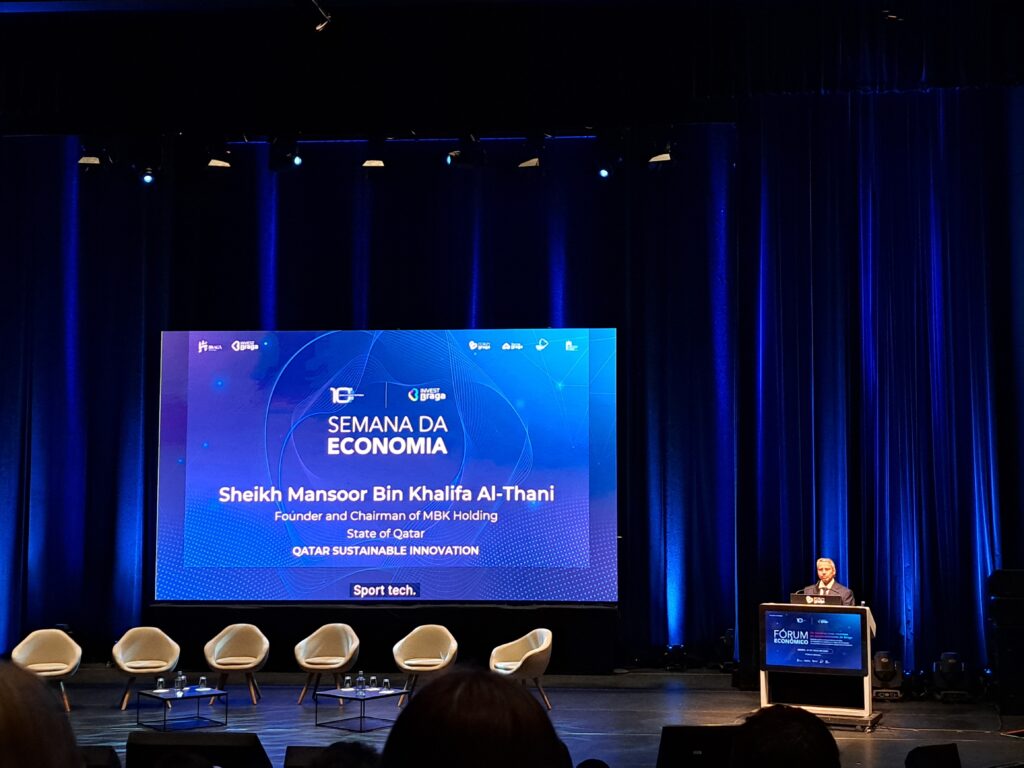
Sheikh Mansoor Bin Khalifa Al-Thani, Founder and Chairman of MBK Holding, from Qatar, revealed the importance of sustainable innovation for the development of his country, which is why a fund worth 1 billion dollars was created to support start-ups and the creation of start-up hubs. The Sheikh also highlighted the Municipality of Braga as an example of innovation and the intention to create bridges between Braga and Qatar in terms of innovation.
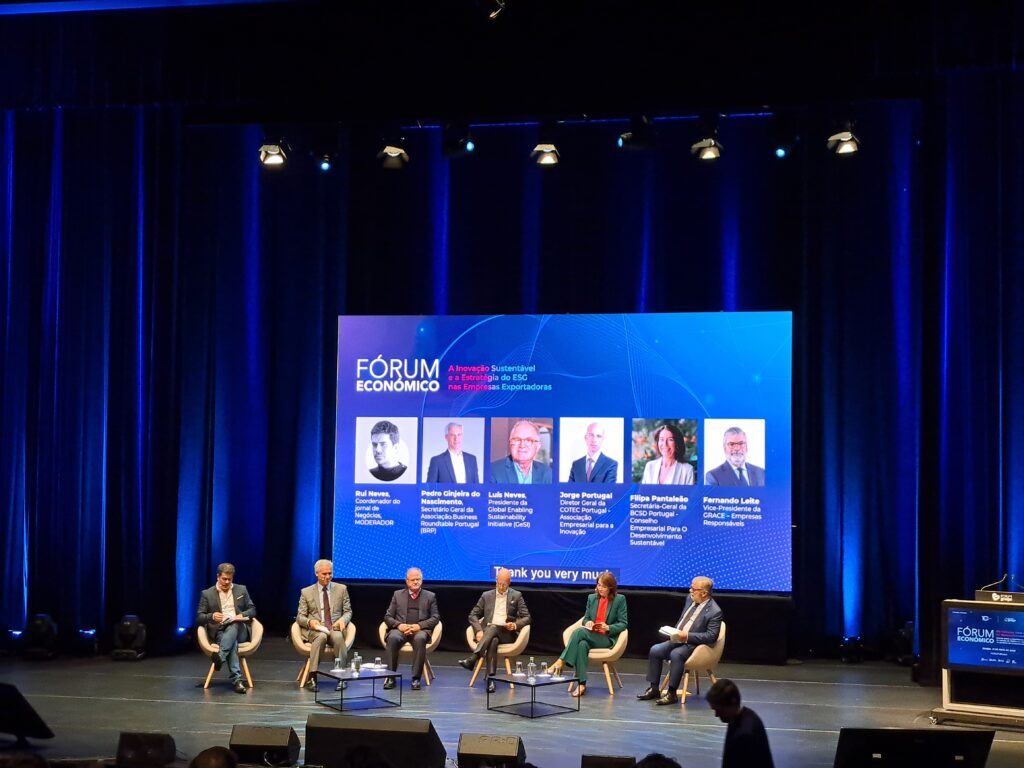
The debate “Sustainable Innovation and ESG Strategy in Exporting Companies” was moderated by Rui Neves (Jornal de Negócios) and the participation of Fernando Leite (Vice-President da Grace), Filipa Pantaleão (General Secretary of BCSD Portugal), Jorge Portugal (General Director of COTEC Portugal), Luís Neves (President of GeSl) and Pedro Ginjeira do Nascimento (General Secretary BRT Association).
During the panel, topics related to ESG and the impact that innovation can have in terms of creating sustainable solutions in terms of biodiversity, climate, energy, inclusion and human empowerment were discussed. The importance of digital tools for creating value was also highlighted, as well as their positive impact on the Sustainable Development Goals.
Systemic innovation proves to be a fundamental pillar for the country’s development, however, only 1.7% of GDP is invested in innovation, which compared to other European countries is still scarce, given that innovation creates value and change from knowledge. It is therefore important to bring companies closer to innovation capital for their growth.
The fact that the Portuguese business fabric is mostly made up of micro, small and medium-sized companies reveals that there is a lack of scale in the business fabric that boosts productivity and that many companies stagnate because they are not prepared to grow. Given that there are only 1,300 large companies in the country and that not all of them are exporters, there is a deficit that compromises the country’s growth at a business level.
Governance was one of the most discussed topics, given that the absence of solid governance models in Portuguese companies means that many plans do not get off the ground. The absence of Governance models, as well as Risk Management frameworks in companies, proves to be one of the companies’ Achilles heels, which is why initiatives have emerged that aim to support companies in these areas.
In terms of sustainability reporting, it was clear that companies’ investment in compliance requires technical conditions, human and financial capital. It was also revealed that sometimes Top Management is still unaware of issues linked to sustainability and that companies do not produce long-term strategies, regardless of their size, which could undermine their compliance with many of the sustainability regulations that have come into force in Europe. The absence of clear guidelines and guides that allow companies to begin responding to these new demands was one of the points raised in this debate.
The forum ended with a speech by the Secretary of State for Economy, João Rui Ferreira.